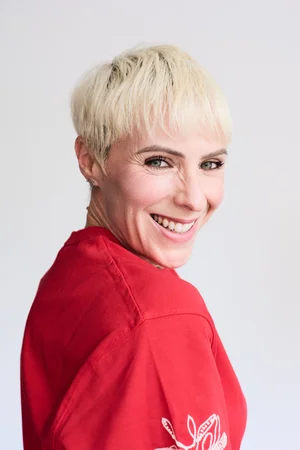
Confidence Doesn’t Always Feel Confident
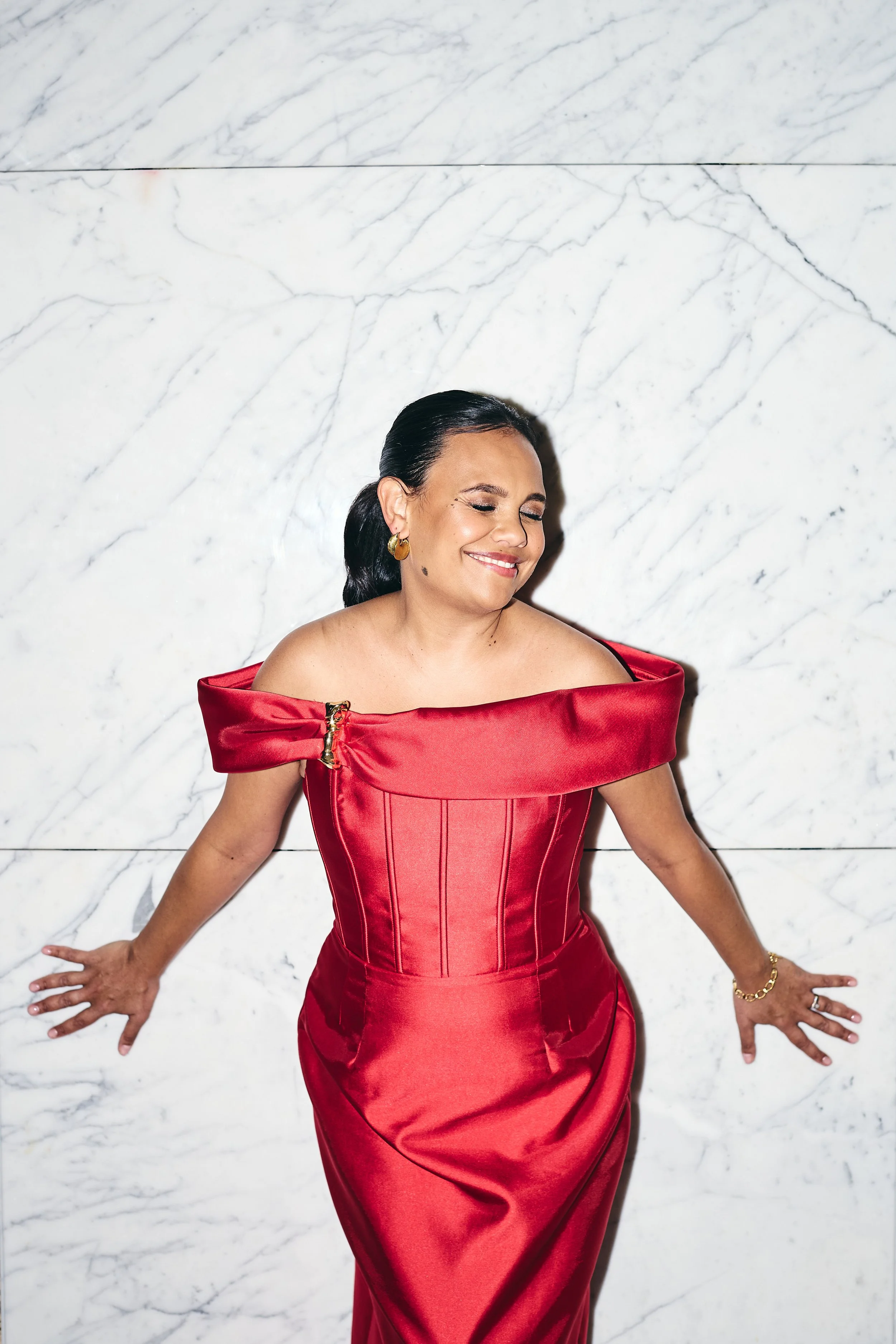
Photographing Miranda Tapsell at the Logies. Putting myself forward may have looked like confidence from the outside, but I was nervous. Sometimes confidence isn’t feeling certain—it’s choosing to do the thing anyway.
Others can remember the details. They can tell you where you were, what you wore, what happened first, and what happened next. They may even remember you as happy, outgoing, or confident.
But you are the one who knows how it felt.
That distinction has been on my mind lately, especially when I think about confidence in front of the camera.
The feeling is what stays.
A portrait session might look completely fine from the outside. You turned up. You smiled when you were asked to smile. You stood where you were told to stand. The resulting photographs may even have been technically good.
But if you felt exposed, awkward, or rushed while they were being taken, that is often the part you remember.
Long after the details have faded, the feeling stays with you.
Then, when another camera is pointed in your direction, you don’t arrive as a blank slate. You bring the memory of not knowing what to do with your hands. Of holding a smile until your face hurts. Of being shown an image before you were ready and immediately looking for everything you disliked about yourself.
You might call yourself “unphotogenic,” but often you are responding to an experience rather than stating a fact.
Looking confident and feeling confident are different things.
We tend to think confidence should be visible. We expect it to look like certainty, ease, and a willingness to take up space.
But a person can appear composed while feeling deeply uncomfortable. They can speak clearly even as their hearts race. They can smile for a photograph while wishing the camera would disappear.
A camera records the surface. It cannot tell us how safe someone feels beneath it.
That is why the experience of being photographed matters as much as the final photographs. If the process feels horrible, it can be difficult to separate that feeling from the images. When you see them, you don’t just see your face. You remember how awkward you felt in the moment.
The opposite can also be true.
When you are given time to settle, when you know what is expected of you, and when someone is paying attention to how you feel—not only how you look—the experience can begin to change the way you see yourself.
You don’t need to transform into a naturally confident person. You need a little support and a few things in your back pocket for the moments when you feel unsure.
What can make being photographed feel easier?
Before the session.
First, tell your photographer what you are worried about. You are not being difficult by saying that you feel nervous, that you dislike a particular angle, or that a previous session left you uncomfortable. That information helps a thoughtful photographer look after you.
If you feel self-conscious about your body, you can say that too. You do not need to list everything you dislike about yourself. It may be enough to explain what helps you feel at ease, what you prefer to wear, and any firm boundaries you want your photographer to understand. The aim is not to hide or “fix” you. It is to make photographs without asking you to battle your body throughout the session.
Choose clothes that feel like you. A portrait session is not the best time to become a character you think you should play. Wear something that lets you breathe, move, and recognize yourself. If you are constantly adjusting a neckline or wondering whether an outfit looks right, it is much harder to relax.
In front of the camera.
Give yourself permission to warm up. The first ten minutes do not need to produce the photograph. They are a transition—from arriving with everything else in your head to being present in the room. I expect those first moments to feel unfamiliar. They are not evidence that you are bad at being photographed.
Move rather than trying to hold a perfect pose. A small shift of weight, a breath, a step, or a turn can stop your body from feeling frozen. You should not have to arrive knowing what to do. Clear, gentle direction is part of the photographer’s job.
Try not to overthink your smile. It is easy to get caught wondering whether to show your teeth or keep your mouth closed, but a genuine expression is difficult to manufacture by arranging your mouth correctly. Conversation, breathing, and movement give expression somewhere more natural to come from. You do not have to hold a smile on command.
When you see the photographs.
And try not to judge every frame while you are still adjusting to seeing yourself. Most of us know our mirror image, not the version of our face that a camera shows us. Unfamiliar does not automatically mean unflattering. Sometimes an image needs a little space before you can see the whole person rather than immediately inspecting individual features.
These things might sound small, but small pieces of preparation can change the feeling of a session. And when the experience feels better, seeing the photographs can feel different too.
Sometimes confidence is simply doing the thing.
Recently, I put out a call for a personal portrait project on social media. I didn’t know who would respond or what the project might become. There was no client brief and no guaranteed outcome. I was offering my time because I wanted the creative experience, not because my work had no value.
That distinction matters.
The response brought remarkable people into my orbit, including Australian actors and producers, and together we made portraits I am incredibly proud of.
Before I did it, I felt excited and nervous. Putting the invitation out publicly felt exposing. There was the possibility that nobody would answer, that I would choose the wrong words, or that the idea would not work as I imagined.
More than 20 years of experience did not remove those feelings.
What it gave me was the ability to act alongside them.
That, I think, is a more useful definition of confidence. Confidence is not always a calm feeling that arrives before we do something difficult. Sometimes it is the decision to move, even when the nervousness is still there.
The project gave me new work, new relationships, and renewed creative energy. More importantly, it reminded me that confidence grows when we give ourselves evidence that we can do unfamiliar things.
A different experience can create a different memory.
This is true when you step in front of the camera, too.
You do not have to wait until you feel completely confident to book a portrait session. You do not need to practice looking natural or become comfortable with every part of yourself first. You can arrive nervous. You can say that it feels hard. You can take your time.
The goal is not to disguise those feelings well enough to look confident. The goal is to have an experience in which you feel supported enough to stay present despite them.
Perhaps you will still feel awkward for the first few minutes. Perhaps seeing yourself will still bring up complicated feelings. But you may also leave with new evidence: that you can be nervous and still do it, that you can be guided without being controlled, and that a photograph can feel like you without requiring you to perform.
Other people may remember what your confidence looked like. You will remember how it felt. Perhaps next time, let’s make that feeling part of the photograph.
Katie x