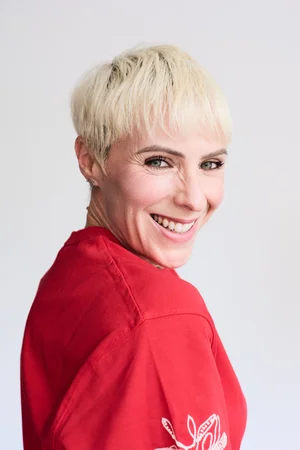
Why Do I Feel So Awkward in Photos?
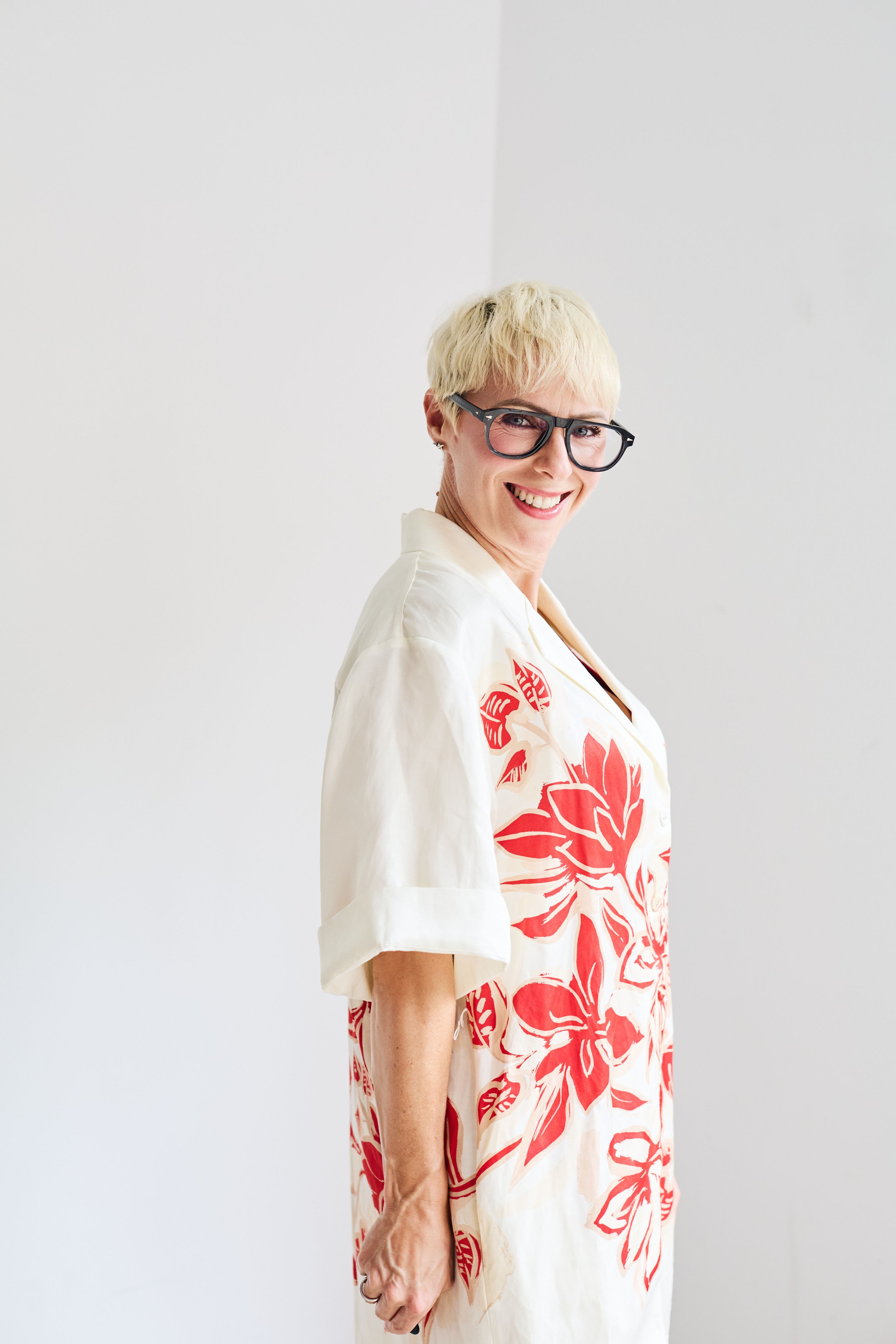
I used to find this deeply uncomfortable. Now I can choose to be seen.
In Year 12, I was given an award for “Best Looking.”
I know. Poor me.
It sounds like the sort of prize you are supposed to accept with a flick of the hair and a gracious little smile. But I remember feeling genuinely upset by it. One of my really good friends came up to me afterwards and said, “Oh, I really wanted that prize.”
And I remember thinking: *Why? Why would you want to be called the best looking?*
Because I didn’t believe it.
It didn’t match the story I had been told about myself.
I had spent years hearing comments about my body and the way I presented myself.
“You’ve always had a stomach.”
“Why do you dress like a boy?”
“Put some lipstick on.”
I had been picked on. I felt uncomfortable in my body and unsure of how I was supposed to look. So being given that award didn’t suddenly make me feel beautiful. It made me feel even more visible.
It was as if everybody was looking at me and seeing something I couldn’t see—and I was waiting for them to realise they had made a mistake.
That is the strange thing about the stories we carry. Someone can hand you completely different evidence, and you still might not believe it.
Why do I feel awkward in photos?
In my experience, people often feel awkward in photos because a camera makes them intensely aware of themselves. They start monitoring their face, body, smile and hands while imagining how other people might judge the result. The more often someone has told themselves, “I’m awkward in photos,” the more natural that reaction begins to feel.
But feeling awkward and *looking* awkward are not the same thing. That distinction has taken me years to understand.
Awkwardness can become a story about who you are.
Awkwardness is not always something that appears the moment a camera comes out. Sometimes it has been growing quietly for years.
It grows through careless comments. Through comparison. Through being told that your body should be different, your clothes should be more feminine, or your face needs lipstick before it is acceptable.
Eventually, “I feel awkward” becomes “I am awkward.” And once you believe something about yourself, you start collecting proof.
You notice the photograph where your mouth is caught halfway through a word. You notice the angle you don’t like. You notice your stomach before you notice the joy on your face. You delete the image and avoid the next one. Then, because you rarely see yourself in photographs, every new picture feels unfamiliar and confronting.
The story keeps proving itself because it is the only story being given any airtime. I know this because I did it too.
I became a photographer—the safest possible place for someone who didn’t enjoy being photographed. Behind the camera, I knew exactly what to do. I could direct people, shape the light, find their angle and help them relax. I went from beginning my career in London to photographing celebrities, musicians, artists, models and people who would much rather have hidden behind the nearest pot plant.
I could see what made other people interesting and beautiful. I just struggled to offer myself the same generosity.
“Awkward” was the most common answer.
When people join the Confidence Club, I ask them to describe how they feel in front of a camera.
In a recent review of 187 answers, awkwardness was the largest theme. Thirty-four responses described feeling awkward, and 28 people used the exact word “awkward.” Other common themes included negative self-image, discomfort, insecurity and feeling self-conscious.
Some people said they avoided cameras entirely. Some felt nervous or overwhelmed. One person said they didn’t mind being in front of the camera—they didn’t like what they saw afterwards.
That last part matters.
The camera is not only recording how we look. It can activate every opinion we have absorbed about how we *should* look.
After more than 20 years as a portrait photographer, I don’t think most people need to be “fixed” or taught how to become photogenic. They need practical direction, certainly. But they also need enough safety and practice to stop treating every photograph as a verdict.
I finally stepped in front of my own camera.
When I began taking self-portraits, I felt awkward, exposed and uncomfortable. But there was one fairly important detail: I was alone. No one was watching. No one was judging. No one was waiting for me to know what to do with my hands.
I could take as long as I liked. I could try a pose, hate it, move, try again and laugh at myself. I could choose the frame I wanted and edit it the way I wanted. I decided what left the camera roll and what stayed between me and my phone.
That control gave me room to experiment.
At first, taking my own photo felt like proof of everything I already believed. I was stiff. I overthought my face. I didn’t know whether to smile or look serious. But the more I practised, the more useful information replaced the judgement.
I learnt that my right side feels more like me. I learnt that I look more alive when I wear colour. I learnt what distance and lens choice can do to a face. I learnt that a natural smile will always feel more like me than the “professional” expression I thought I was supposed to wear. Most importantly, I became familiar with my own face. I didn’t suddenly love every photograph. I still don’t. I stopped expecting every frame to prove my worth.
Take more photos, not fewer.
This is the advice nobody who hates photos wants to hear: take more of them.
Not because you need more content. Not because you should perform confidence for Instagram. And not because taking 400 photographs guarantees that number 401 will magically be perfect. Take more photographs because avoidance keeps you unfamiliar with yourself.
When you only see yourself in the occasional group photo or badly timed screenshot, every image carries enormous pressure. It has to be flattering. It has to feel like you. It has to justify all the effort it took to get in front of the camera.
Regular self-portraits lower the stakes. They let a photograph become what it actually is: one expression, from one angle, in one fraction of a second. That is all. It is not a report card on your face. It is not proof that everybody who has ever complimented you was lying. It is not the final chapter in the story of how you look.
A simple way to practise camera confidence.
If you want to feel less awkward in photos, begin when nobody else is around.
1. Put your phone near a window and use the timer.
2. Take enough photos that no single frame feels precious.
3. Keep moving instead of holding one rigid pose.
4. Give your hands something to do: use a pocket, touch your hair or hold an object.
5. Look away, breathe out, then bring your eyes back to the lens.
6. Choose one photograph based on what feels like *you*, not what looks the most perfect.
7. Before deleting anything, ask: “Is this a bad photograph, or am I repeating an old story?”
Do this gently. You do not have to post the pictures. Nobody needs to see them. The first goal is not to love how you look.
The first goal is to make looking at yourself feel less alarming.
You can change the direction of the story.
For a long time, I thought awkwardness was part of my identity.
The Year 12 version of me could receive a “Best Looking” award and still feel like the awkward girl people had picked apart. The label didn’t help because it came from somebody else. I had not changed the story I was telling myself.
That is why confidence cannot be handed to you as a prize. It is built through small pieces of evidence you are finally willing to notice—one photograph where you recognise yourself.
Stories can begin to feel like facts when we repeat them for long enough. But that also means we can interrupt them. We can question them. We can collect different evidence and choose a different direction.
That is one of the reasons I created the Confidence Club.
I didn’t create it because I have always been naturally confident in front of a camera. I created it because I know what it is like to want to hide while also wanting to be seen. I know what it is like to be capable and confident in life, then become intensely self-conscious when somebody points a lens at you.
I share posing tips because knowing what to do with your body helps. I share camera and lighting tricks because sometimes the problem really is the lens, the angle or the light. But I also talk about the stories underneath all of that, because the perfect pose cannot silence a voice you have been rehearsing since you were a teenager.
Today, taking photographs and showing up on camera have made me more confident in myself. Not perfectly confident. Not permanently confident. But practised.
I have learnt that awkwardness is a feeling I can move through, not a fact about who I am.
And you can learn that too.
Katie x